Germany Study Abroad Requirements with TestAS: Mandatory Regulations, Module Selection, and Safe Scores
High school graduates from Vietnam and other non-EU countries planning to pursue undergraduate studies in Germany must sit the standardized TestAS examination. The test result is a mandatory prerequisite for obtaining the APS academic verification certificate from the German Embassy and submitting admission applications through Uni-assist. Candidates can choose to take the test in English or German, and certificates remain valid indefinitely.
If you are unfamiliar with the fundamental exam format, fees, and administrative procedures, start with our foundational guide: What is TestAS? Exam Structure, Fees, and Registration Guide 2026.
Is TestAS Mandatory for Studying in Germany? Regulations from APS and DAAD
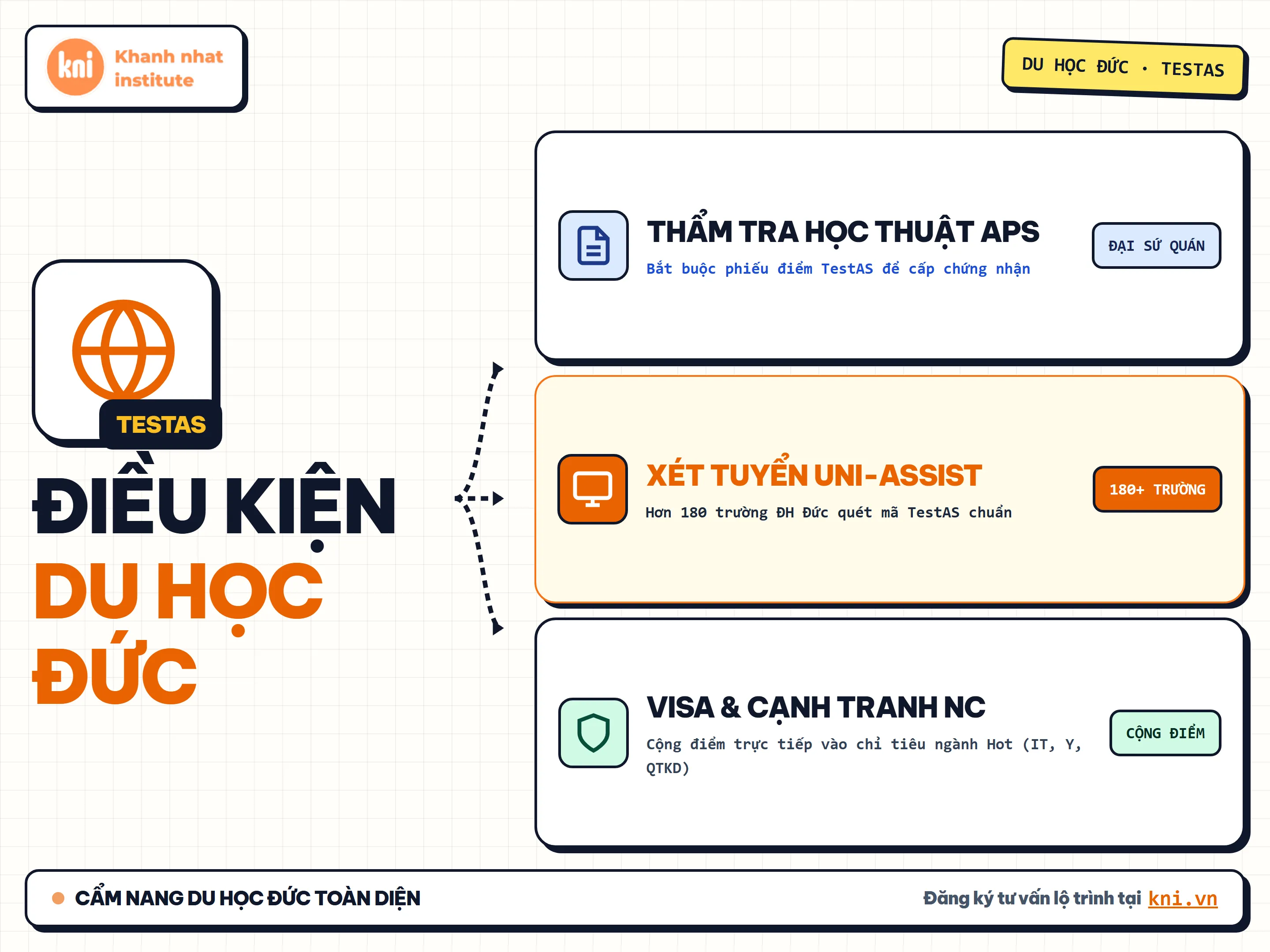
According to official admission policies set by the German Academic Exchange Service (DAAD) and the Academic Evaluation Centre (APS) at the German Embassy in Hanoi, TestAS (Test for Academic Studies) is a mandatory cognitive assessment for most non-EU international applicants seeking Bachelor-level admission in Germany.
Regulations by Applicant Group
- High school graduates from Vietnam: Taking TestAS is strictly compulsory. The official score report is an indispensable component of the general APS dossier. Without this certificate, your application cannot proceed to student visa issuance.
- Students with 1 to 4 semesters of university study in Vietnam: Depending on whether you transition within the same academic discipline or switch majors upon entering Germany, TestAS may serve as a compulsory prerequisite or a selective merit factor determined by individual universities.
- Graduated university degree holders: TestAS is generally not required if applying directly for Master's programs, unless specified by specialized degree faculties.
The Role of TestAS in the German Study Application Pathway
The TestAS certificate plays a pivotal role across four consecutive stages of the overseas study roadmap:
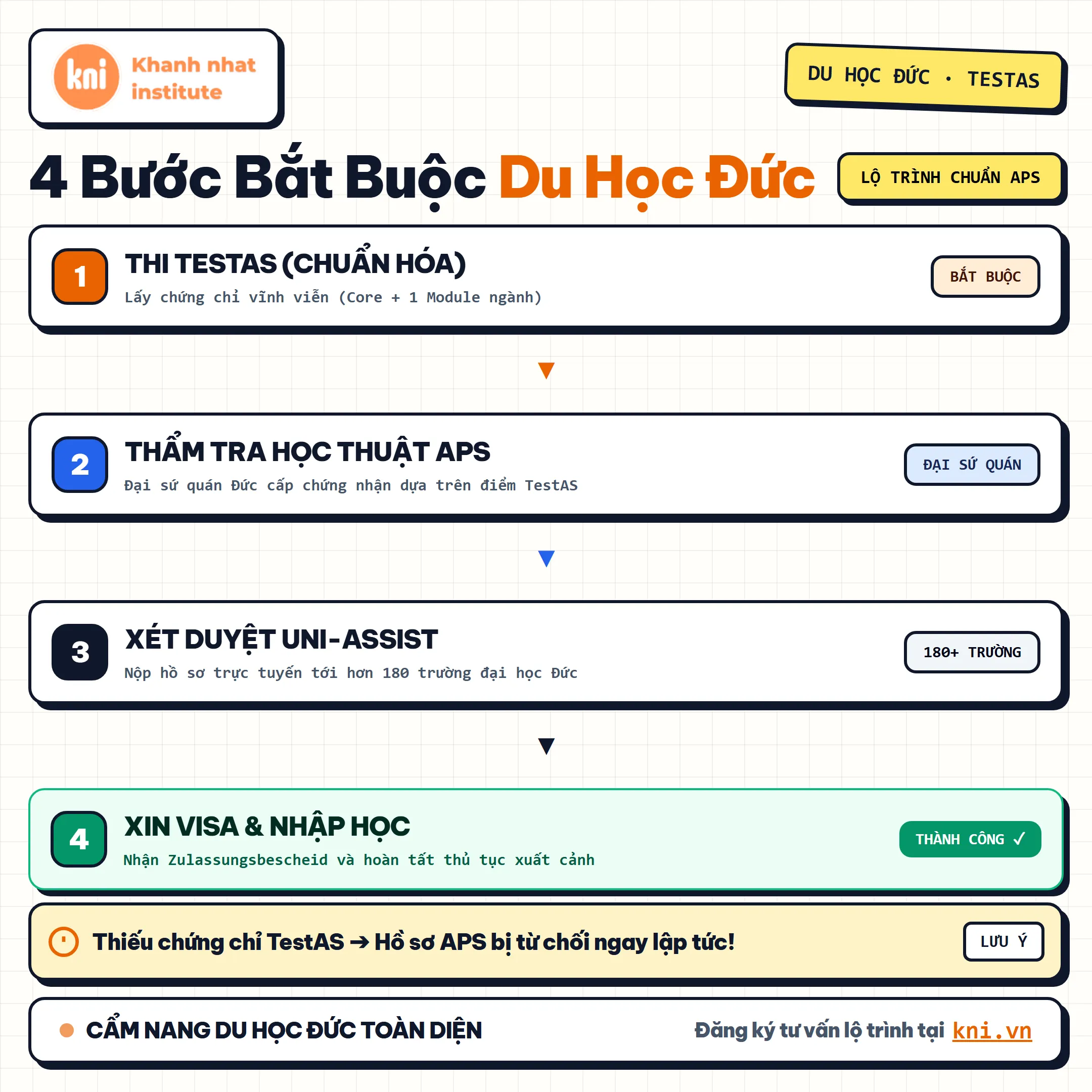
- APS Verification: The German Embassy only issues an APS certificate for high school applicants once a valid TestAS score report is submitted. Without APS certification, no subsequent application steps can proceed.
- Uni-assist Processing: Uni-assist screens preliminary documents for over 180 German universities. If a compliant TestAS score report is missing, dossiers are flagged as incomplete and processing halts immediately.
- Numerus Clausus (NC) Competitiveness: High-demand fields with restricted quotas (such as Medicine, Pharmacy, Computer Science, and Business Administration) combine TestAS scores with converted high school graduation grades (converted German Abitur). Higher TestAS marks substantially enhance your odds of receiving an admission letter (Zulassungsbescheid).
- Embassy Visa Issuance: A strong TestAS score provides objective evidence of academic competence, facilitating seamless student visa reviews.
Beyond German universities, you can also utilize these results for admission into Vietnamese-German University (VGU) domestically in Vietnam.
Why You Should Take TestAS from Grade 11: Lifetime Validity and Timeline Advantages
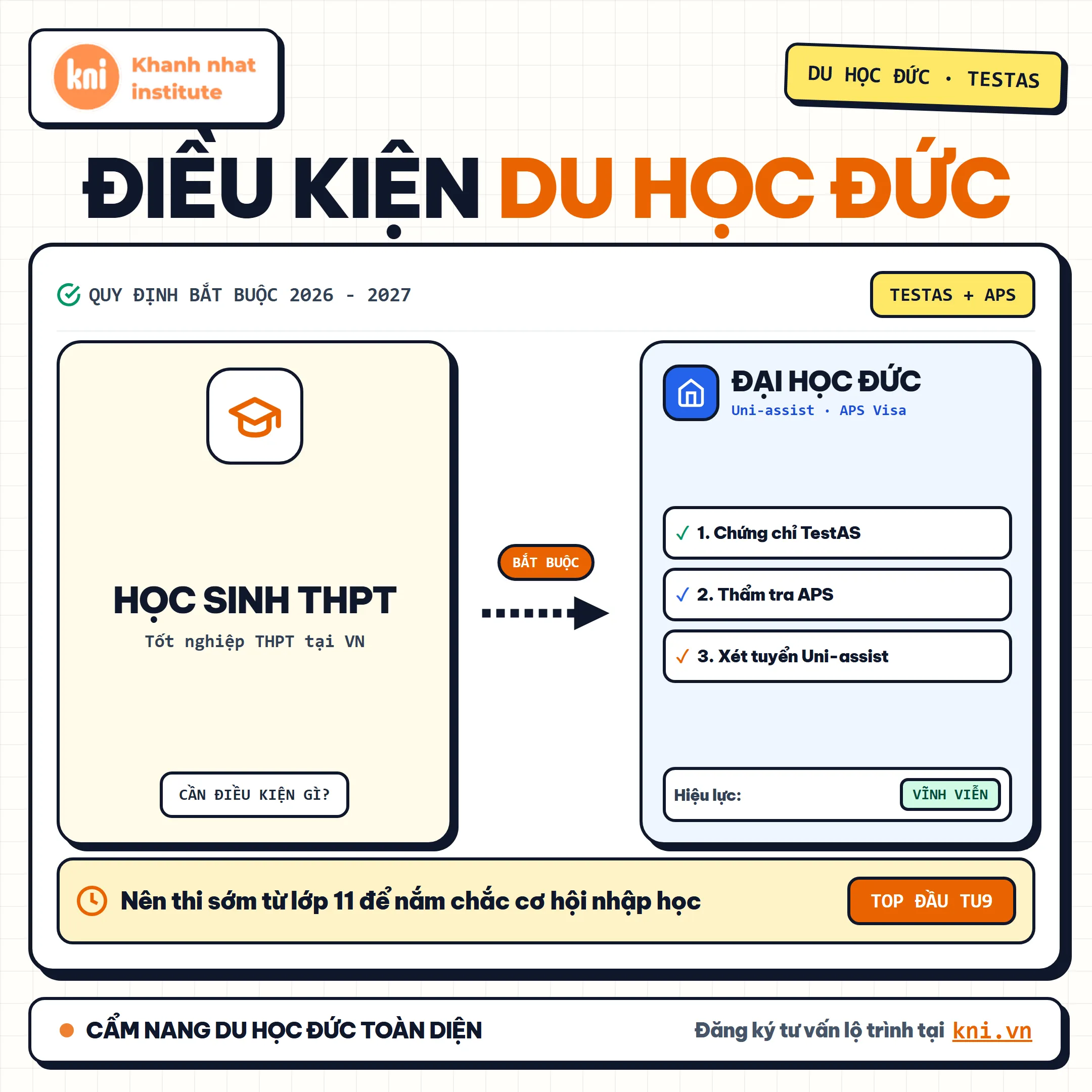
A frequent pitfall for students is postponing TestAS preparation until after national high school graduation exams in June of Grade 12. This delay often results in missing the Winter Semester intake (commencing in October) at German universities.
Tight Processing Timelines for German Applications
Preparing a complete German application package typically spans 6 to 9 months:
- TestAS score release: 4 – 5 weeks.
- APS submission and certificate verification: 4 – 8 weeks.
- Uni-assist document appraisal: 3 – 6 weeks.
- University admission offer and Embassy visa processing: 4 – 8 weeks.
If you sit TestAS during summer after Grade 12, even a minor administrative bottleneck will delay your enrollment timeline by a full academic year.
TestAS Certificates Never Expire
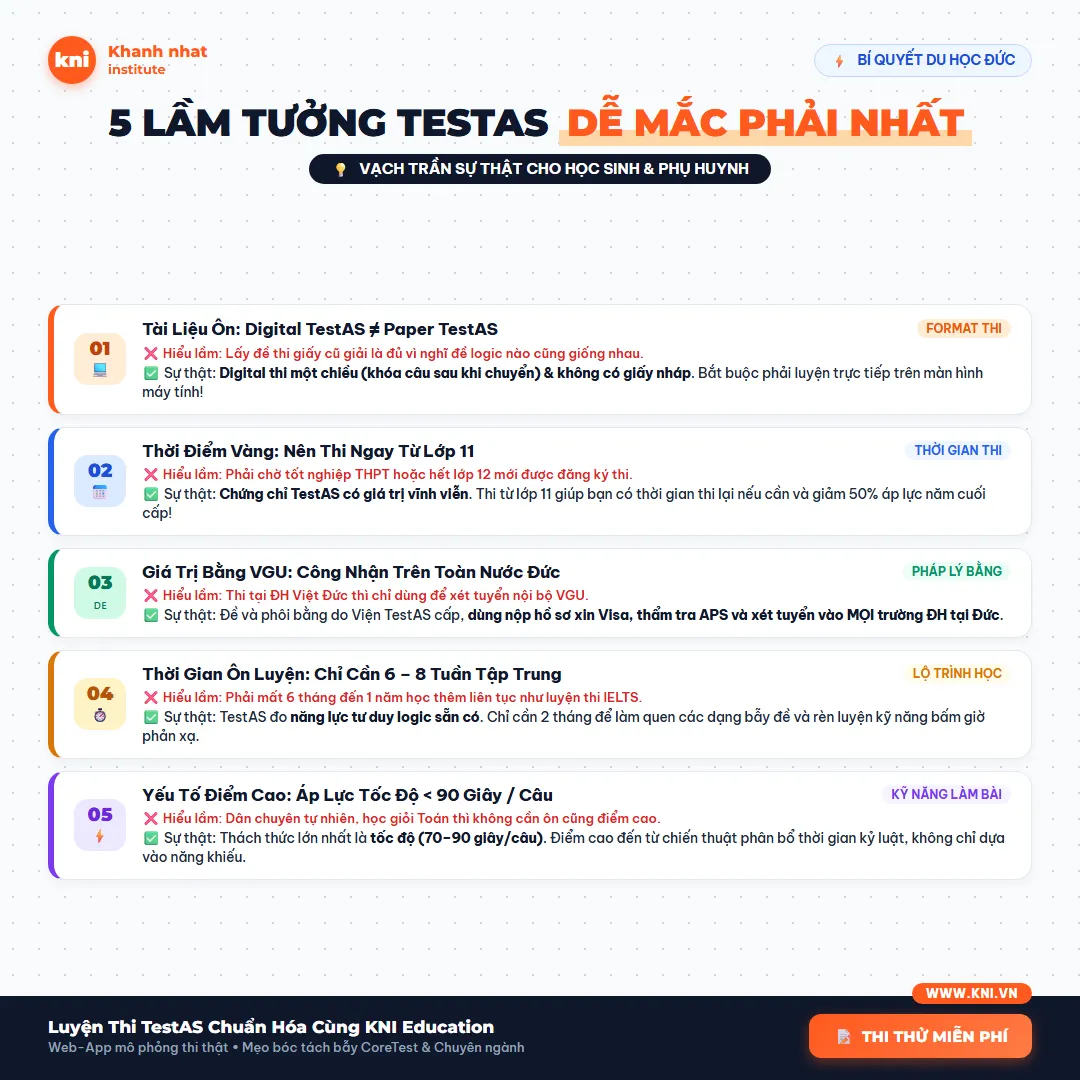
Unlike English certificates (IELTS, TOEFL) or German language credentials (Goethe-Zertifikat, TestDaF) which generally expire after two years, TestAS score reports remain valid indefinitely. Your scores never expire, allowing you to submit them at any future date.
Early Preparation Pathway from Grade 11
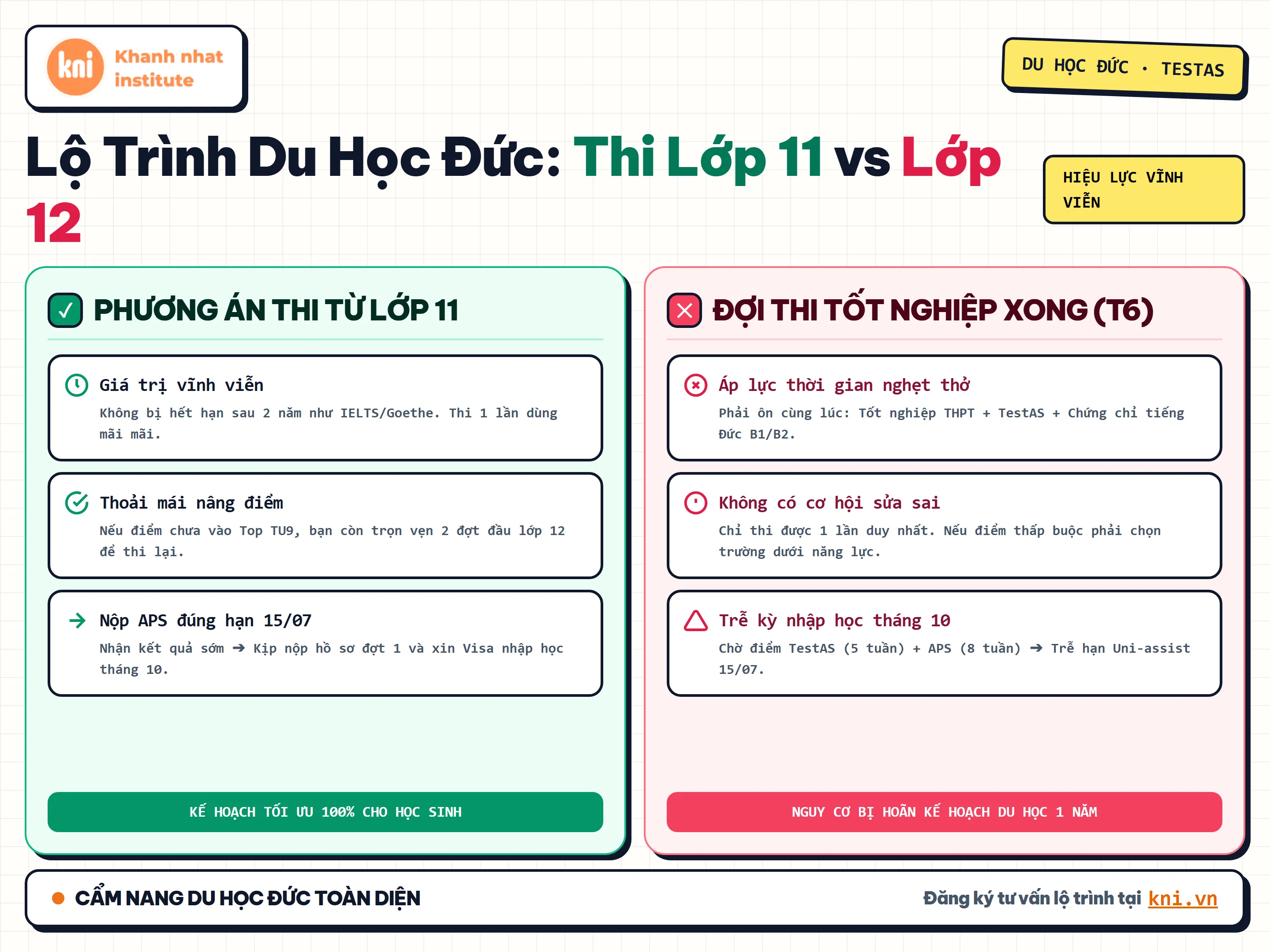
Given its permanent validity, scheduling your TestAS sitting during Grade 11 or early Grade 12 (October–November sessions) offers significant advantages:
Key benefits of an early testing timeline:
- Reduced Senior Year Pressure: With a verified TestAS score in hand, Grade 12 can be devoted entirely to national graduation examinations and foreign language proficiency.
- Opportunity to Retake: TestAS places no restrictions on retake attempts. Sitting the test early gives you ample leeway to resit if your initial score falls short of elite university thresholds.
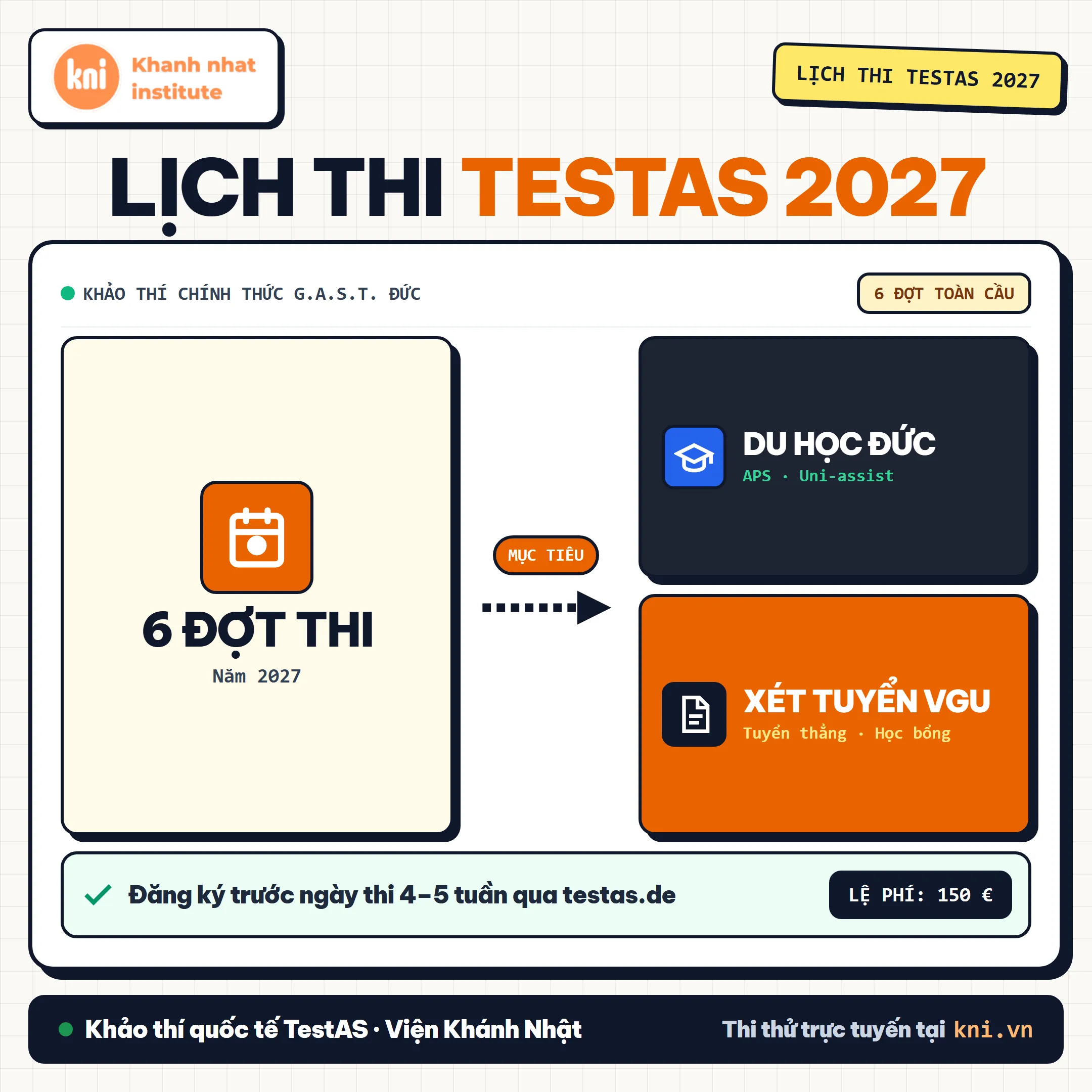
Review upcoming exam dates: Official TestAS 2027 Exam Dates and Registration Deadlines.
Guide to Selecting Among 6 Digital TestAS Subject Modules
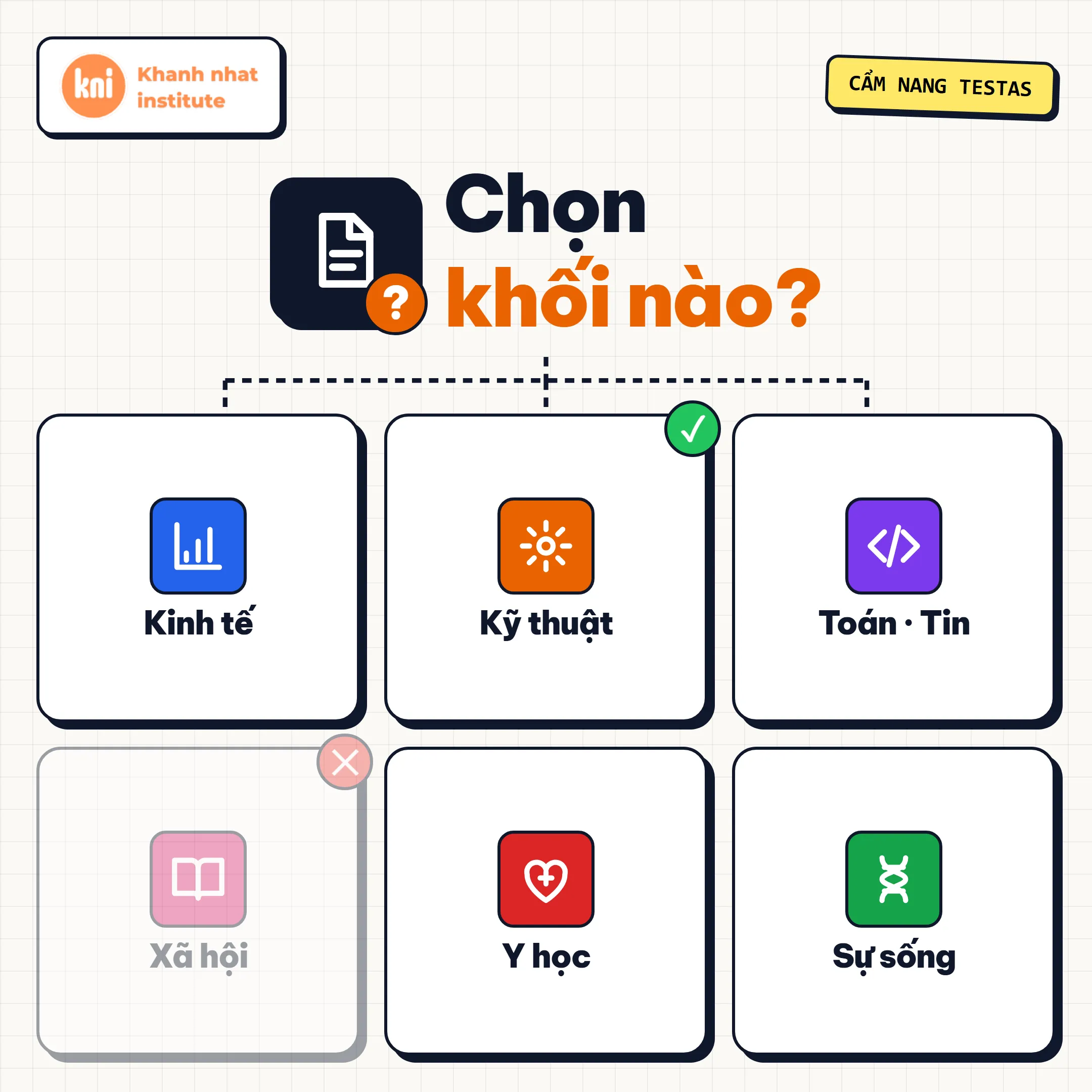
Unlike the paper-based exam with 4 traditional fields, Digital TestAS features 6 specialized subject modules. Candidates must register for the precise module matching their intended German degree course:
| Intended Field of Study in Germany | Corresponding TestAS Module | Core Competencies Assessed |
|---|---|---|
| Mathematics, Computer Science, Data Science, Physics | Mathematics, Computer Science and Natural Sciences | Algorithmic logic, deductive reasoning, abstract model evaluation |
| Mechanical, Electrical, Mechatronics, Automotive, Civil Engineering | Engineering | Spatial visualization, mechanical dynamics, physical schematics |
| Business Administration (BWL), Economics (VWL), Finance, Logistics | Economics | Financial chart interpretation, tabular data analysis, cost optimization |
| Human Medicine, Dentistry, Pharmacy | Medicine | Biomedical diagram memorization, clinical pattern recognition, medical quantification |
| Biotechnology, Environmental Sciences, Agriscience | Life Sciences | Ecological principles, biological experimental data analysis |
| Linguistics, Psychology, Media, International Relations, Sociology | Humanities and Social Sciences | Textual structure breakdown, verbal critical reasoning, survey graph evaluation |
Read our detailed module breakdown: How to Choose Your TestAS Subject Module for VGU and Germany.
Should You Take TestAS in English or German?
During registration, you are free to select either English or German as your test language.
A critical guideline: Choose the language in which you process information and reason logically fastest, regardless of the instruction medium of your prospective German degree program.
TestAS evaluates analytical thinking under strict time pressure—not grammatical accuracy. If your German has not reached a solid B2 level, testing in English is far safer. Reading slowly or misinterpreting technical terms due to vocabulary hurdles can cause unnecessary point deductions even when your reasoning is entirely correct.
Comparing Digital TestAS vs. Paper TestAS: The 70–90 Second Per-Item Clock
Presently, both exam modes are administered globally. However, the computer-based format (Digital TestAS) enforces rigorous time restrictions compared to traditional paper sessions:
| Criteria | Paper TestAS (Written) | Digital TestAS (Computer-based) |
|---|---|---|
| Exam Duration | Core Test: 110 mins.Subject Module: 145 – 150 mins. | Core Test: approx. 90 mins.Subject Module: approx. 90 mins. |
| Module Availability | 4 traditional modules (Medicine not separated). | 6 specialized modules (dedicated Medicine & Life Sciences modules). |
| Score Metric | Standard Score from 70 to 130 (Global Mean: 100). | Numerical TestAS Score from 0 to 200. |
| Pacing Architecture | Block timing. Examinees allocate time freely across sections. | Per-item countdown clock (70 to 90 seconds per question). |
| Item Review Capability | Students can revisit earlier questions to revise answers. | Timeouts automatically advance and permanently lock questions. |
| Annual Test Frequency | Approx. 3 fixed sessions annually. | Greater flexibility across accredited test centres. |
The Per-Item Countdown Mechanism in Digital TestAS
The single most defining operational difference in Digital TestAS is item-level timing:
- On paper: You receive an entire test booklet and distribute your minutes freely, tackling easy questions first and returning to difficult problems later.
- On computer: Every individual question carries an independent countdown timer (typically 70–90 seconds). Once time runs out, the system automatically submits your response, locks the question, and displays the next item. There is no back button.
Tactics for Handling Time Pressure
To succeed under Digital TestAS conditions, cultivate these targeted habits:
- Practice directly on screens: Utilize dedicated testing software or set strict individual-question timers at home to acclimatize to countdown tension.
- The 20-Second Heuristic: Read and categorize each item quickly. If after 20 seconds no clear solution path emerges, apply elimination heuristics and pick the most probable alternative immediately. Never let the clock expire on a blank answer.
- Avoid retrospective anxiety: Once a question locks, maintain 100% focus on the subsequent problem appearing on screen.
Read our in-depth format comparison: Digital TestAS vs. Paper TestAS: Detailed Format Comparison.
Safe TestAS Scores for German University Admissions
To accurately gauge admission prospects, understand the grading metrics of your chosen format:
- Paper TestAS: Employs a Standard Score scale from 70 to 130, where 100 represents the international benchmark average. The scorecard also displays a Percentile Rank indicating the proportion of global test-takers scored at or below your mark.
- Digital TestAS: Utilizes a TestAS Score metric from 0 to 200 calculated via item-response algorithms balancing correct items and item difficulty.
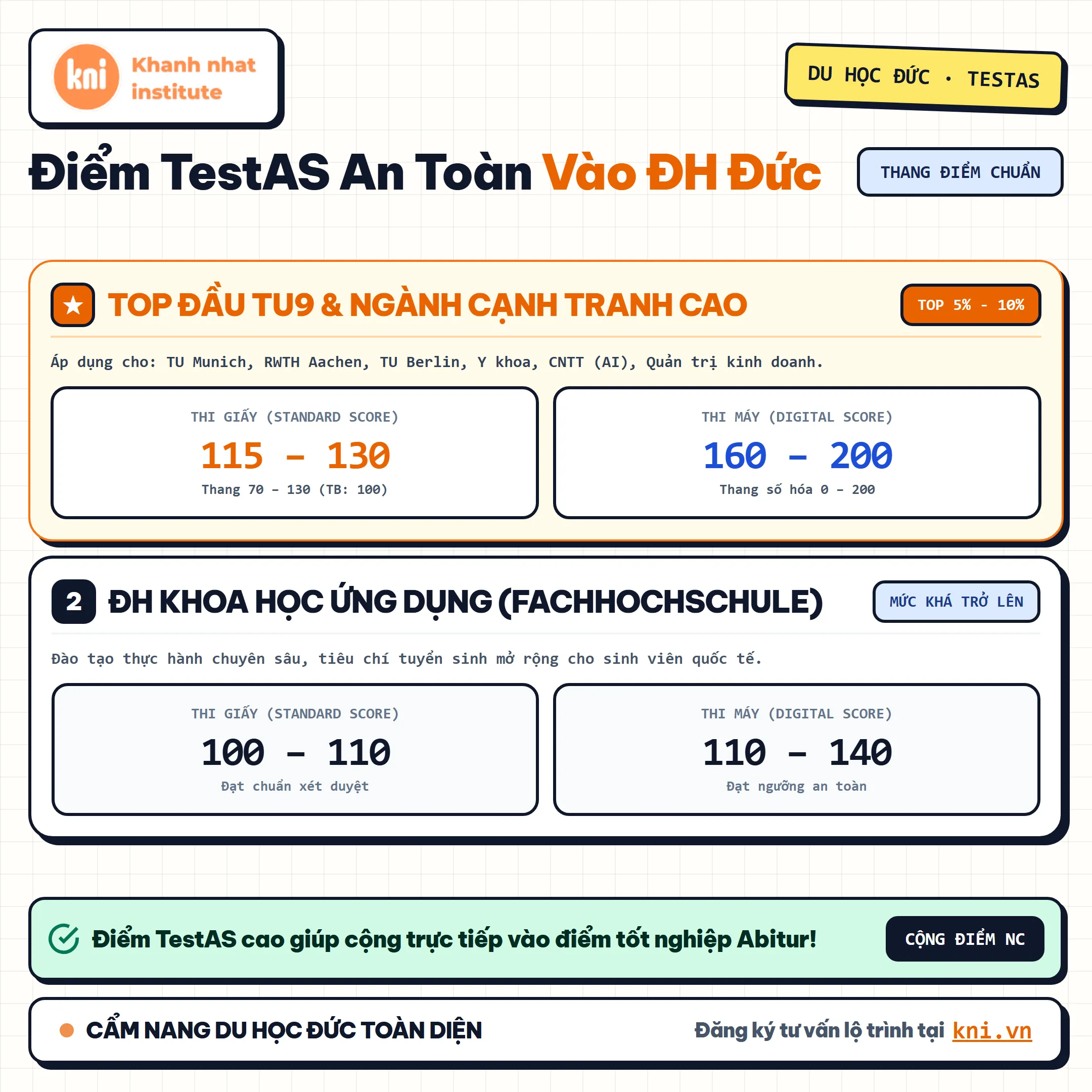
Safe Score Benchmarks Across University Categories
| Institution Category & Field | Paper TestAS (Standard Score) | Digital TestAS Score | Selectivity Level |
|---|---|---|---|
| Tier 1: Leading Technical Universities (TU9), Medicine & Competitive CS | 115 – 130 (Top 10% – 5% globally) | 160 – 200 | Very High (Maximizes Abitur conversion bonus) |
| Tier 2: Universities of Applied Sciences (Fachhochschule - FH) | 100 – 110 (Above Average) | 110 – 140 | Moderate (Standard competency verification) |
1. Leading Technical Universities (TU9 Alliance) and High-Demand Majors
Institutions belonging to the TU9 alliance (TU Munich, RWTH Aachen, TU Berlin, KIT, etc.) and restricted quota subjects (Medicine, Pharmacy, Computer Science) impose high academic bars:
- Paper format: Strive for a Standard Score between 115 and 130 (ranking in the top 10% of global test-takers).
- Digital format: Aim for a TestAS Score between 160 and 200, securing maximum conversion weight for admission portfolios.
2. Universities of Applied Sciences (Fachhochschule - FH)
Fachhochschulen emphasize applied practical education with versatile admission guidelines:
- Paper format: A Standard Score of 100 to 110 (at or above average) represents a solid safe margin.
- Digital format: A TestAS Score from 110 to 140 comfortably validates requisite analytical aptitude.
Frequently Asked Questions (FAQ)
1. Is TestAS mandatory for high school graduates from Vietnam studying in Germany?
Yes. For general high school graduates from Vietnam, a verified TestAS score is strictly required to secure the APS verification certificate from the German Embassy. Without APS certification, you cannot apply for a German student visa.
2. How long is the TestAS certificate valid?
TestAS certificates never expire. Unlike language tests such as IELTS or TOEFL which lapse after two years, TestAS results are valid indefinitely. You can sit the exam in Grade 11 and retain your score permanently for future university applications.
3. Can I retake TestAS to improve my score?
Yes. There is no limit on retake attempts. Candidates may register for subsequent sessions and submit the scorecard with their highest achieved performance.
4. Should I take TestAS in English or German?
Choose the language in which you think and process logic quickest. If your German has not reached a firm B2 level, taking the exam in English is strongly advised, as the test measures analytical reasoning rather than linguistic prowess.
5. Can I return to previous questions in Digital TestAS?
No. Digital TestAS assigns an independent countdown clock to each item. When time expires, the platform advances to the next question and permanently locks the previous one.
Structured TestAS Preparation with KNI Education
If you need baseline diagnostic assessments, experience with countdown pressure on authentic simulation software, and a streamlined 6–8 week curriculum, train with KNI Education.
👉 Register for Free Diagnostic Testing and Personalized Advising at KNI to launch your German academic journey today!